
A Trusted Relationship, Two Different Businesses, One Consistent Approach
Working With Aaron Scibona Across Multiple Engagements
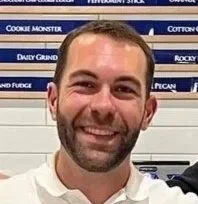
Aaron Scibona
- Wealth Advisor & Entrepreneur
Some of the best working relationships don't start with a formal engagement. They start with a conversation, a shared way of thinking, and a mutual respect that builds over time. My relationship with Aaron Scibona is exactly that.
Aaron is a founder and President with an MBA and the kind of restless, growth-oriented mind that is always building toward something. Over the course of several years, he brought me in across two very different businesses — at very different stages — to help him see what was difficult to see from inside.
That's the nature of the work. Not to take over, but to illuminate.
Engagement One:
Ag-Tech Startup
The Situation
Aaron was operating inside a fast-moving, early-stage ag-tech company that had earned recognition as a top innovation in agriculture engineering. The business was growing — but it was also, in his words, figuring things out on the fly.
The complexity was real. Manufacturing, R&D, field operations, supply chain, installation, and customer service were all running simultaneously. At that stage of growth, that kind of cross-functional pressure is normal. But it creates a specific kind of problem: when things go wrong, the symptoms appear everywhere — and they rarely point directly to the actual cause.
Depending on who you asked inside the organization, the problem was something different. And at the leadership level, the pressure was compounding. Breakdowns weren't just operational — there were fractures emerging between the board and leadership that added another layer of complexity to an already strained system.
What I Found
My role in situations like this is consistent regardless of the environment: come in, gather perspective from every level of the organization — frontline employees, managers, executives, and in this case the board of directors — combine that with direct observation, and use the full picture to identify what's actually happening beneath the surface.
What I found wasn't a department problem. It was a structural one.
The visible inefficiencies and execution breakdowns were symptoms. The root issues were misalignment across teams, unclear decision-making authority, gaps in communication, and a lack of defined ownership over critical functions. The board and leadership tensions weren't the cause of the operational problems — but they were amplifying them. Without those things resolved at the structural level, every operational problem that surfaced was being addressed in isolation, which meant the same categories of problems kept returning.
Reactive decisions were being made in the field because the structure upstream hadn't been clarified. Resources — time and capital — were being consumed by friction that shouldn't have existed.
The Work
I worked across the organization both strategically and operationally. That meant consulting with the Business Manager, CTO, VP of Operations, and Board of Directors on policies, processes, and structural decisions — and it also meant being present on the ground, participating in hands-on work, and observing how things actually moved in practice rather than how they were supposed to on paper.
I analyzed and helped improve manufacturing processes, R&D coordination, field operations, supply chain and inventory management, product installation, and customer service. I helped lead coordination between internal teams and external contractors and identified bottlenecks and inefficiencies across the system as they appeared.
My role was never to make decisions for the organization. It was to communicate clearly what I was observing, offer my honest assessment of the significance of each issue, and make recommendations that the leadership team and board could act on. Quality feedback — honest, direct, and grounded in observation — is the foundation of that kind of work. The improvement gaps don't close until someone is willing to name them clearly.
The Outcome
Operational efficiency improved across multiple departments. Execution friction decreased. Teams and leadership developed better alignment, and the organization became more capable of identifying root causes rather than reacting to downstream symptoms. Resources were used more effectively as the structural clarity improved.
Engagement Two:
Uptown Dairy — Ice Cream & Coffee
The Situation
The second engagement was a different kind of challenge entirely — and in some ways, the more instructive one.
Aaron had an idea for an ice cream retail concept in Ankeny, Iowa. A from-scratch startup. His first self-started venture, with no prior food service background behind it. Before anything else, two questions had to be answered honestly:
Does this make sense financially? And does this make sense emotionally — are you truly prepared for what building this will actually require?
Anyone who has walked the path of first-time entrepreneurship knows what that second question really means. It's not about doubt. It's about clarity. Building something from nothing — especially in unfamiliar territory — carries a weight that the business plan doesn't capture. The anxiety, the uncertainty, the moments where the vision feels further away than the problems feel close. Those are real, and they deserve to be named before the commitment is made, not discovered after.
I remember standing together at the future Uptown Dairy location — just the two of us — on a raw construction site. Poured footings curing in the ground, gravel underfoot, stakes and string mapping out what didn't exist yet. Aaron was envisioning it. Talking through what it could become.
It was a genuinely good moment. The kind of early-stage conversation that reminds you why people build things.
And then I asked the question that needed to be asked:
"It sounds like a neat idea — but what do the numbers say?"
That question isn't meant to deflate. It's meant to protect. A good idea without operational clarity, financial validation, and the human capital to execute isn't a business yet. It's a risk. My job at that stage was to pressure-test the concept honestly — financially and emotionally — before the real commitment went in.
The Work
We built it from the ground up together.
That meant co-developing a full business plan and financial model to validate whether the concept was actually viable. It meant designing the operational systems, policies and procedures, customer experience flow, and back-of-house layout before a single employee was hired. It meant identifying licensing, regulatory, and compliance requirements early — the kind of details that become expensive surprises if they're discovered late.
It also meant building the brand identity and the execution framework that would carry the concept from idea to opening day — and developing the training systems that would allow the team to deliver a consistent experience from day one.
Critically, all of this was accomplished without a personal capital investment from Aaron. The business was built on the strength of the plan, the systems, and the preparation — not on writing a personal check and hoping for the best.
As the build-out progressed, I supported contractor and vendor coordination and assisted with buildout planning. When it was time to open, I led staff onboarding and training and assisted with launch execution.
The goal throughout was the same as it always is: remove the unknowns before they become problems. Make sure that when the doors opened, there was a functioning operational system behind them rather than improvisation.
The Outcome
Uptown Dairy launched successfully — and then something happened that no amount of planning could have arranged.
On day five of being open, RAGBRAI came through Ankeny. For those unfamiliar, RAGBRAI is one of the most celebrated cycling events in the country — a weeklong ride across Iowa that has run annually for 75 years. It had only passed through Ankeny three times in its entire history. On the fifth day Uptown Dairy was open, thousands of cyclists rolled right past the front door and along the high trestle bike trail just out front.
The stars aligned. And the business was ready for them.
What followed was something that's difficult to manufacture: a loyal, almost cult-like customer following, a growing social media presence, and a genuine, active place in the Ankeny community. The menu has expanded — coffee joined the lineup late last year, evolving the concept into Uptown Dairy: Ice Cream & Coffee. The operational systems built before opening have supported continuous improvement rather than requiring constant reinvention.
Checking back in and seeing the revenue growth, the community connection, the expansion — it's one of those outcomes that makes the early work feel worth it.
From a question asked on a cold construction site to a thriving local business with a story people want to be part of. That's what the process is supposed to produce.
What These Two Engagements Have In Common
The businesses were different. The industries were different. The stages were different.
But the approach was the same.
Come in and observe carefully. Gather perspective from every level — frontline to boardroom. Ask the questions that aren't being asked internally, including the uncomfortable ones. Identify what's actually limiting progress, not just what appears to be. Fill the improvement gaps before they widen. Communicate it clearly, make recommendations grounded in reality, and let the people building the thing make better decisions with better information.
I operate best in environments where something feels off, where execution isn't matching the vision, where the real problem hasn't been clearly identified yet — and where the gap between where things are and where they could be is worth closing.
That's the work.
"Nick doesn't just advise, he identifies what's actually in the way and helps you fix it. What set him apart was the quality of his questions. He listened before he ever suggested anything, learned our situation from every angle, and when recommendations came, they fit what we were actually dealing with, not some generic playbook."
- Aaron Scibona, Wealth Advisor & Entrepreneur
— The ag-tech engagement is referenced without identifying details at the client's request. Aaron Scibona and Uptown Dairy are referenced with full knowledge and permission.
If any of this resonates with where you are right now — Let's Talk About Your Situation